
Oyster extract powder: what the ingredient name on our label means
Natural Oyster Extract Powder, 300 mg: what each word on the Rocket Fuel ingredient line states under the naming rules, and what the panel leaves unstated.

One line on the Rocket Fuel panel does most of the work: Natural Oyster Extract Powder, 300 mg. Four words and a weight. This post reads that line the way the regulations read it: what a name on a Supplement Facts panel has to do, what each word states, and what the line leaves unstated. Nothing here is about what the ingredient does; it is about what the label says.
What an ingredient name has to do
Ingredients are listed "by common or usual name in descending order of predominance by weight" (21 CFR 101.4(a)(1)), and the name "shall be a specific name and not a collective (generic) name" (101.4(b)). Inside the panel, FDA's labeling guide says the same: ingredients without a Daily Value "must be listed by their common or usual names when they are present in a dietary supplement" (question 9).
What makes a name common or usual is set out in 21 CFR 102.5. The name "shall accurately identify or describe" the "basic nature of the food or its characterizing properties or ingredients," and do it "in as simple and direct terms as possible" (102.5(a)). It "shall be uniform among all identical or similar products" (102.5(a)), and it "may be established by common usage or by establishment of a regulation" (102.5(d)). Read against that rule, the name on our line is a description: it says what the ingredient is, in plain words, and it is specific in the way 101.4(b) asks. Oyster, not shellfish.
Word by word: natural, oyster, extract, powder
| Word | What it states | Not stated on the panel |
|---|---|---|
| Natural | A descriptor the maker printed as part of the name | What process the word refers to |
| Oyster | The source: a food, a molluscan shellfish | Species; waters; wild or farmed |
| Extract | A preparation drawn from the source, not the whole oyster | The solvent; the extract ratio |
| Powder | A dried extract, listed by weight (FDA guide, question 32) | Drying method; particle size |
| 300 mg | The weight of the powder per 1-tablet serving | The amount of zinc or any other component |
"Natural" comes first and is part of the name as printed; the panel does not say which process the word refers to, and the word deserves a post of its own. "Oyster" names the source: a food, with entries in public nutrient tables (more on those below).
"Extract" and "powder" describe a preparation and its form, and FDA's labeling guide sorts extracts into two kinds. For liquid extracts, "You must list liquid extracts using the volume or weight of the total extract," the solvent must be identified "in either the nutrition label or ingredient list," and concentration information "may" be included, in a format like "x (y:z) in 70% ethanol" (question 31). For dried extracts, "you must list the weights of the dried extracts" (question 32). A powder is a dried extract, so the number on our line is the weight of the dried powder in one serving: 300 mg of the ingredient as listed, not of the oysters it came from.
What the line leaves unstated
Here is our label, and here is what it does not print.
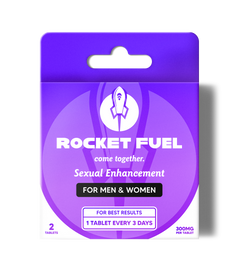
Ratio: a concentration such as 10:1 "may" be included for a liquid extract (question 31); a dried extract is listed by weight (question 32). Our line prints no ratio, so the ratio is not stated. Solvent: required for liquid extracts; our line is a dried powder and prints none, so it is not stated. Species and origin: the naming rule in 101.4(h), with the part of the plant and the Latin binomial, covers "botanicals (including fungi and algae)," and the page sets no equivalent for shellfish. The panel prints no species. The product page describes the extract as wild-caught Atlantic oyster extract; the panel line prints neither word, so on the panel the species and the waters are not stated. Zinc: the panel declares 300 mg of powder and no zinc amount, so it is not stated.
Reading any extract line. After the name, look for three things: a ratio (10:1, 4:1), a solvent (water, ethanol), and a species or plant part. Each one that isn't printed is not stated, and the honest reading leaves the gap open. That is how this blog reads our own line too.
Oysters as a food, in the public tables
The word "oyster" names a food, and public nutrient tables describe foods. The NIH Office of Dietary Supplements zinc fact sheet includes a table, "Zinc Content of Selected Foods." Here are its two oyster rows and four others, as printed. The percent column rests on a footnote: "The DV for zinc is 11 mg for adults and children age 4 years and older."
| Food, as printed in the NIH ODS table | Milligrams of zinc per serving | Percent DV |
|---|---|---|
| Oysters, Eastern, farmed, raw, 3 ounces | 32 | 291 |
| Oysters, Pacific, cooked, 3 ounces | 28.2 | 256 |
| Beef, bottom sirloin, roasted, 3 ounces | 3.8 | 35 |
| Blue crab, cooked, 3 ounces | 3.2 | 29 |
| Pumpkin seeds, roasted, 1 ounce | 2.2 | 20 |
| Greek yogurt, plain, 6 ounces | 1.0 | 9 |
Two cautions, both plain. These rows describe foods, by the serving the table uses, and say nothing about any supplement. And 300 mg of a dried extract powder is not 3 ounces of raw oysters: with no extract ratio stated, no arithmetic carries a food-table number over to the tablet. Rocket Fuel's panel declares a weight of powder and no zinc amount, and this post leaves it there.
The shellfish line
FDA's food allergy page lists nine major food allergens: "milk, eggs, fish, Crustacean shellfish, tree nuts, peanuts, wheat, soybeans, and sesame," with the examples "Crustacean shellfish (for example, crab, lobster, shrimp)." Oysters are molluscan shellfish rather than crustaceans, and the page does not mention oysters, clams, mussels or scallops. It does say the law reaches supplements: "This includes dietary supplements." And it gives the two forms a declaration takes: "In parentheses following the name of the ingredient," or "Immediately after or next to the list of ingredients in a 'contains' statement," as in "Contains wheat, milk, and soy."
Rocket Fuel prints "Contains oyster (shellfish). Do not take if allergic." (quoted from the product page). That is the second form, a contains statement, with the specific source first and the broader word in parentheses. Whether a statement is required for a molluscan shellfish is not stated on the page we read; the line is printed either way.
If shellfish is a concern for you, the contains line is the one to read first, and the box's own instruction is all this blog will add: do not take if allergic. Any further question belongs to a doctor or pharmacist, with the box in hand.
A name is a declaration, not an approval
Dietary supplements don't require FDA approval before sale, and the ingredient name on a Supplement Facts panel is the manufacturer's own declaration, written to the naming rules in 21 CFR 101.4 and 102.5 and the weight rules in FDA's labeling guide. Our line declares a dried oyster extract powder, 300 mg per tablet, under a specific name. It does not declare a ratio, a solvent, a species or a zinc amount, and we don't fill those gaps on its behalf. Read the four words and the weight, and let the rest stay not stated.
Questions people ask
Sources
- 21 CFR 101.4 - Food; designation of ingredients · Legal Information Institute, Cornell Law School
- 21 CFR 102.5 - Common or usual name for nonstandardized foods: general principles · Legal Information Institute, Cornell Law School
- Dietary Supplement Labeling Guide: Chapter IV. Nutrition Labeling · U.S. Food and Drug Administration
- Zinc: Fact Sheet for Health Professionals (Table 2, Zinc Content of Selected Foods) · NIH Office of Dietary Supplements
- Food Allergies · U.S. Food and Drug Administration
- Rocket Fuel product page: label facts, directions and warnings · Shop Rocket Fuel
Figures quoted from other brands come from their public product pages and labels on the date shown above. If a label doesn't state a number, we say so rather than guess.
Informational only. This article is not medical advice and does not make claims about what any product does. Dietary supplements are not reviewed by the FDA before sale. These statements have not been evaluated by the Food and Drug Administration. This product is not intended to diagnose, treat, cure, or prevent any disease.

Why Rocket Fuel is a rounded triangle: inside the tablet and the box
A tour of the Rocket Fuel box as printed: the rounded-triangle tablet, the one-line panel, the every-3-days directions line and the two warnings.
Rocket Fuel vs. a proprietary-blend tablet: the two labels, line by line
Rocket Fuel's one-ingredient panel next to the proprietary-blend format as 21 CFR 101.36 defines it: what each line states and what each leaves out.
Single ingredient vs. proprietary blend: two supplement labels, read side by side
What a single-ingredient label states that a proprietary blend label doesn't, line by line, using the FDA labeling regulation as the referee.
Want to read our label?
Natural oyster extract powder, xylitol, starch. 300 mg of oyster extract per tablet, one tablet every 3 days. Free US shipping on every order.
For adults 18+. Rocket Fuel contains shellfish (oyster).